The Power, Legitimacy and Urgency Model
Maps stakeholder behaviour according to its balance of three characteristics:
Power: Of the stakeholder to influence the organisation
Legitimacy: of the relationship in terms of desirability or appropriateness
Urgency: The expectations of the stakeholder in terms of criticality and time-sensitivity

Maps stakeholder behaviour according to its balance of three characteristics:
Power: Of the stakeholder to influence the organisation
Legitimacy: of the relationship in terms of desirability or appropriateness
Urgency: The expectations of the stakeholder in terms of criticality and time-sensitivity
The Power, Legitimacy and Urgency Model
Maps stakeholder behavior according to its balance of three characteristics:
Maps stakeholder behavior according to its balance of three characteristics:
- Power: Of the stakeholder to influence the organisation
- Legitimacy: of the relationship in terms of desirability or appropriateness
- Urgency: The expectations of the stakeholder in terms of criticality and time-sensitivity

 Decision makers / Project Managers have been required to work more inclusively with a wide range of stakeholders. Stack holder’s values, political concerns and ability to influence the top management many times shadow the purely technical viewpoints. We must bring stake holder’s values into the risk assessment. Stakeholders are no longer satisfied with the “Three-‘I’ Model’: ‘inform, invite, and ignore.’” It is acknowledged that the results of a decision-making process have a better chance of being viewed as fair and credible when stakeholders have participated in the deliberation process.
 Advantages of Stakeholder Analysis
 Categorize Stakeholders
 Characteristics of Stakeholders
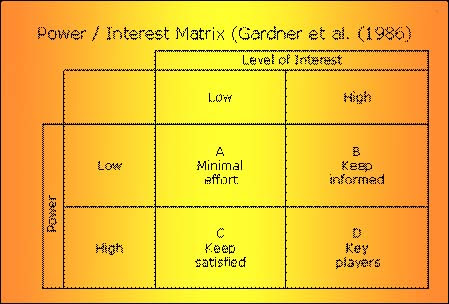
 The Stakeholder Analysis process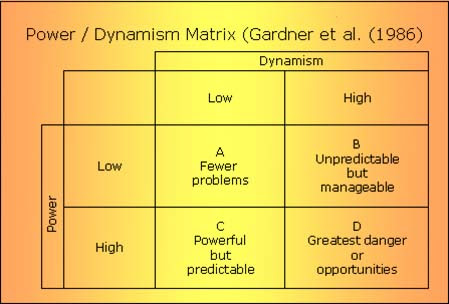
 The term ‘Stakeholder’ refers to persons, groups, or organizations that must somehow be taken into account by leaders, managers, and front-line staff. W. Edward Freeman, in now classic text Strategic Management: A Stakeholder Approach(1984), defined a stakeholder as “any group or individual who can affect or is affected by the achievement of the organization’s objectives”.